2026 Best Laboratory Chemicals for Innovative Research and Development?

In the quest for groundbreaking innovations, laboratory chemicals play a crucial role. The right chemicals can enhance research capabilities and broaden possibilities. As we approach 2026, the demand for high-quality laboratory chemicals continues to rise.

Selecting the best laboratory chemicals is not always straightforward. Researchers often face challenges in sourcing these materials. The quality and purity of chemicals can vary widely among suppliers. Inadequate testing can lead to unreliable results. This inconsistency underscores the necessity for meticulous evaluation of products.

Understanding the landscape of laboratory chemicals is essential for effective research and development. Innovative materials can lead to discoveries that change the world. However, relying on subpar materials can hinder progress. Thus, careful consideration and reflection on chemical choices remain vital for success. Embracing this complexity can ultimately drive more significant advancements.
2026 Best Laboratory Chemicals for Innovative Research and Development?

Overview of Laboratory Chemicals in Innovative Research

In innovative research and development, laboratory chemicals play a vital role. Researchers rely on these substances to conduct experiments and discover new insights. The right chemicals can lead to groundbreaking results. However, choosing the best chemicals is not always straightforward. The options seem endless.

Consider pH indicators. They help scientists monitor acidity and alkalinity. Yet, some may not react as expected. This variability can complicate experiments, making precise measurements challenging. Proper calibration is crucial but often overlooked. Another example is reagents for organic synthesis. They are essential for creating new compounds. But, the quality may vary across suppliers. Researchers must remain vigilant.

Finally, safety data sheets (SDS) are critical. They provide essential information about hazards. Unfortunately, not all laboratories maintain them properly. This negligence can lead to dangerous situations. Understanding safety protocols is as important as knowing the chemicals themselves. In innovative research, these details matter greatly.

2026 Best Laboratory Chemicals for Innovative Research and Development

Chemical Name Chemical Formula Category Application Safety Level
Acetic Acid C2H4O2 Organic pH Adjustment Moderate
Sodium Chloride NaCl Inorganic Buffer Solution Low
Hydrochloric Acid HCl Mineral Acid pH Control High
Ethanol C2H6O Alcohol Solvent Moderate
Boric Acid H3BO3 Acid Antiseptic Low
Calcium Carbonate CaCO3 Inorganic Salt Buffering Agent Low

Key Characteristics of High-Quality Laboratory Chemicals

When selecting laboratory chemicals for innovative research, quality is crucial. High-quality laboratory chemicals exhibit key characteristics that can enhance experimental outcomes. Purity is the foremost requirement. Contaminants can lead to unreliable results, thus it's vital to choose chemicals with a high purity grade. Impurities, even in small amounts, can interfere with reactions.

Solubility is another important factor. Chemicals must dissolve well in the intended solvents to produce accurate results. Poorly soluble substances can create inconsistencies in experimental data. The stability of the chemicals should also be assessed. Some may degrade over time, losing their effectiveness. It's necessary to check expiration dates and storage conditions to maintain integrity.

Moreover, consider the availability of safety data sheets. These sheets provide essential information on handling and potential hazards. Understanding risks is vital for any research team. However, not all chemical suppliers provide complete information. Researchers should remain vigilant and perhaps seek additional resources for safety training. This attention to detail fosters a responsible and effective research environment.

2026 Best Laboratory Chemicals for Innovative Research and Development

This bar chart represents key characteristics of high-quality laboratory chemicals essential for innovative research and development in 2026. The parameters measured include purity, solubility, stability, cost, and safety rating, reflecting the critical factors that researchers consider when selecting laboratory chemicals.

Top Laboratory Chemicals for Biochemical Research Innovations

In the world of biochemical research, selecting the right laboratory chemicals is essential for innovation. Researchers often rely on solvents, reagents, and buffers, which drive their projects forward. For instance, high-purity water can significantly impact experiment outcomes. Without it, results may be compromised.

One area that requires careful attention is the sourcing of organic compounds. Not all chemicals are of equal quality. Impurities can alter experimental data. Researchers must navigate these challenges by conducting thorough background checks on their resources. It's easy to overlook the importance of precise measurements. A small miscalculation can lead to major setbacks.

Innovative research often pushes boundaries. However, this ambition can lead to overconfidence in results. Researchers should embrace failures as learning experiences. In doing so, they can refine their techniques and continue to advance the field. Flexibility in methodology can lead to unexpected breakthroughs, transforming setbacks into stepping stones for future successes.

Trending Laboratory Chemicals for Material Science Development

Material science is evolving rapidly, and laboratory chemicals play a crucial role in this growth. Recent reports indicate that the demand for innovative chemicals has surged by 25% in the past year. This trend highlights the importance of new formulations that can support advanced material research. For instance, high-performance polymers and nanomaterials are key to developing lighter, stronger composites. These materials are essential in various fields, from aerospace to electronics.


Researchers are particularly focused on multifunctional materials. The ability to manipulate chemical properties at the molecular level opens doors for groundbreaking applications. Emerging trends show that modular chemical systems can enhance material performance while reducing costs. However, challenges remain in safety and regulatory compliance. Many new chemicals are still in the testing phase, raising concerns about their long-term impact. While innovation is vital, careful review of safety protocols must accompany this growth.


Collaboration is crucial in overcoming these issues. The latest studies reveal that about 60% of researchers believe interdisciplinary partnerships significantly enhance material science innovation. By sharing knowledge, teams can address obstacles and ensure ethical practices. The road ahead may appear promising, but awareness of potential pitfalls is necessary. Striking a balance between discovery and responsibility is essential for sustainable advancement in laboratory chemicals.

Sustainability and Safety Standards in Laboratory Chemical Usage

2026 Best Laboratory Chemicals for Innovative Research and Development?

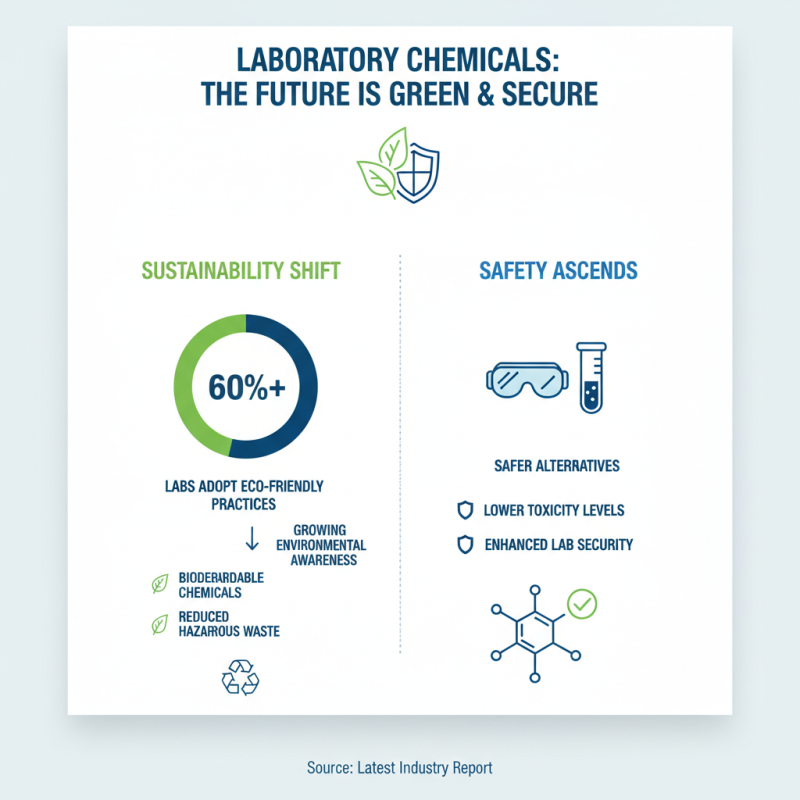
Sustainability and safety are emerging priorities in laboratory chemical usage. According to the latest industry report, over 60% of laboratories now implement eco-friendly practices. This shift reflects a growing awareness of environmental impact. Many organizations have begun to adopt safer, biodegradable chemicals. These alternatives reduce hazardous waste and lower toxicity levels.

The challenge lies in balancing innovation with safety. Research shows that 30% of chemical accidents are due to improper handling and disposal. Labs must now adhere to stricter guidelines. Regular training sessions can help staff understand these new protocols. Proper disposal methods are crucial. Waste management systems should be updated to handle sustainable chemicals effectively.

Moreover, the assessment of chemical life cycles is key to achieving sustainability. Reports indicate that only 25% of labs regularly evaluate the environmental footprint of their chemicals. This lack of assessment can hinder progress. A more comprehensive approach could encourage better decision-making. The ongoing evolution in laboratory practices calls for a collective effort to prioritize safety while fostering innovation.

Scroll to Top