The Best 10 Methods for Safe Chemical Disposal?
Chemical disposal is a critical issue in our society. Proper disposal methods are vital for protecting human health and the environment. Dr. Emily Carter, a renowned expert in hazardous waste management, has stated, "Safe chemical disposal is not just a practice; it's an obligation." Her words resonate as we face increasing challenges in this field.
Many people underestimate the importance of safe chemical disposal. Improper methods can lead to pollution and severe health risks. Factories produce large quantities of hazardous waste. Households also contribute to this problem, often without realizing it. The consequences can be devastating.
In our pursuit of effective solutions, we must recognize that some methods are better than others. Education is key. Many communities lack access to information about safe chemical disposal. This gap can lead to dangerous practices and environmental harm. Reflecting on our current practices is essential. We need to re-evaluate our approaches and consider innovative techniques for safer chemical disposal.
Safe Chemical Disposal: Understanding the Importance of Proper Methods
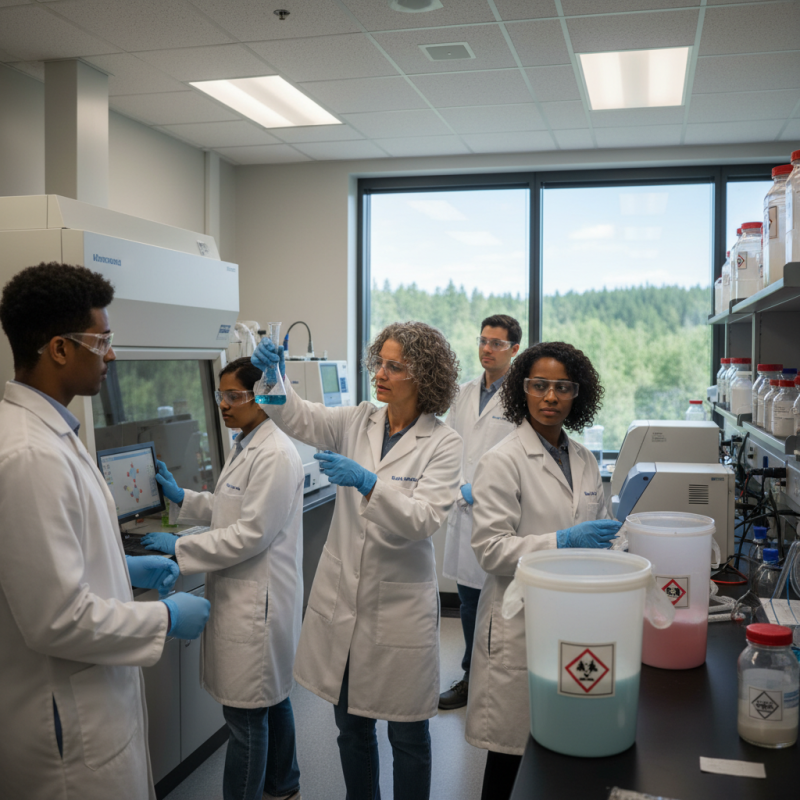
Safe chemical disposal is critical for protecting our environment and public health. The improper handling of chemicals can lead to soil contamination and water pollution. Even small spills can have long-lasting effects. When chemicals are disposed of incorrectly, they can leach into groundwater, affecting drinking water. This is why understanding proper disposal methods is crucial.
Each type of chemical requires specific disposal techniques. Household cleaners, batteries, and paint all need careful handling. Contaminated containers should not simply be thrown in the trash. Hazardous materials often need to be taken to special facilities. Community collection days offer safe options for disposal. However, not everyone knows these events exist. Awareness of local resources is often missing. It is essential to seek guidance before disposing of any chemical product. Ignorance can lead to serious repercussions, both for individuals and the environment. Making informed choices is everyone's responsibility.
The Best 10 Methods for Safe Chemical Disposal
| Method |
Description |
Advantages |
| Incineration |
Burning hazardous chemicals at high temperatures to reduce them to ash and gases. |
Reduces waste volume; effective for organic substances. |
| Landfill |
Disposing of chemicals in a specially designed landfill that prevents leaching. |
Can be a cost-effective solution; suitable for non-hazardous waste. |
| Chemical Neutralization |
Reacting hazardous chemicals with other substances to neutralize them. |
Makes substances less harmful; can be done on-site. |
| Recycling |
Recovering usable materials from chemical waste. |
Conserves resources; reduces landfill use. |
| Waste-to-Energy |
Converting chemical waste into energy through combustion. |
Generates electricity; reduces waste volume. |
| Fermentation |
Using microorganisms to break down organic chemical waste. |
Biodegradable; produces useful byproducts like biofuels. |
| Composting |
Decomposing biodegradable waste through natural processes. |
Enhances soil quality; reduces landfill waste. |
| Chemical Exchange |
Swapping waste chemicals with other companies that can use them. |
Promotes reusability; reduces disposal costs. |
| On-Site Treatment |
Treating hazardous waste at the source before disposal. |
Minimizes transportation risks; can be tailored to specific needs. |
Identifying Different Types of Chemicals for Disposal
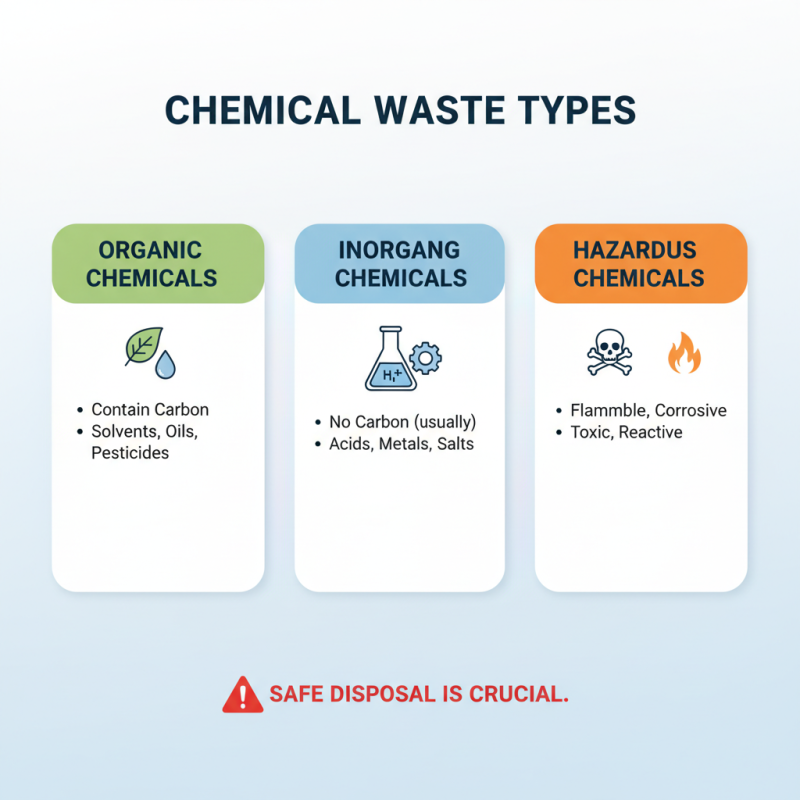
Chemical waste comes in many forms. Understanding the different types helps ensure safe disposal. Common categories include organic, inorganic, and hazardous chemicals. Organic chemicals often contain carbon and are found in solvents, oils, and pesticides. Inorganic substances, like acids and metals, present their own challenges.
Identifying hazardous chemicals is critical. These can be toxic, flammable, or reactive. For instance, heavy metals like lead or mercury require careful handling. Most people underestimate the dangers these substances pose. It's important to read labels and understand the risks before disposal. Remember that not all chemicals belong in the trash. Some must be taken to specialized facilities.
Being informed does not guarantee perfect actions. Mistakes can happen. Individuals may accidentally mix incompatible substances, leading to dangerous reactions. Proper training on handling these materials is often lacking. Regular evaluations of disposal methods are necessary. This ensures safety and compliance with regulations. Being proactive can minimize risks in our communities.
Local Regulations and Guidelines for Safe Chemical Disposal
When it comes to safe chemical disposal, understanding local regulations is crucial. Each area has specific guidelines governing how to handle hazardous materials. Ignoring these laws can lead to severe consequences. It's important to research what is applicable in your region. Many communities have dedicated resources to assist residents.
Local waste management facilities often provide disposal options. Some areas have special collection days for hazardous waste. Residents can drop off items like paints, solvents, or batteries. Knowing when and where these events occur can make disposal simpler. It might require planning ahead, but it's necessary.
Compliance is not just about following rules; it’s about community responsibility. Improper disposal can lead to environmental harm and health risks. Reflect on your practices regularly. Are you fully aware of what your local regulations demand? Staying informed can prevent accidents and encourage safer habits in handling chemicals.
The Best 10 Methods for Safe Chemical Disposal
This chart displays the ten most recommended methods for safe chemical disposal according to local regulations and guidelines. Each method is rated based on its effectiveness and compliance with safety standards.
Best Practices for Household Chemical Disposal
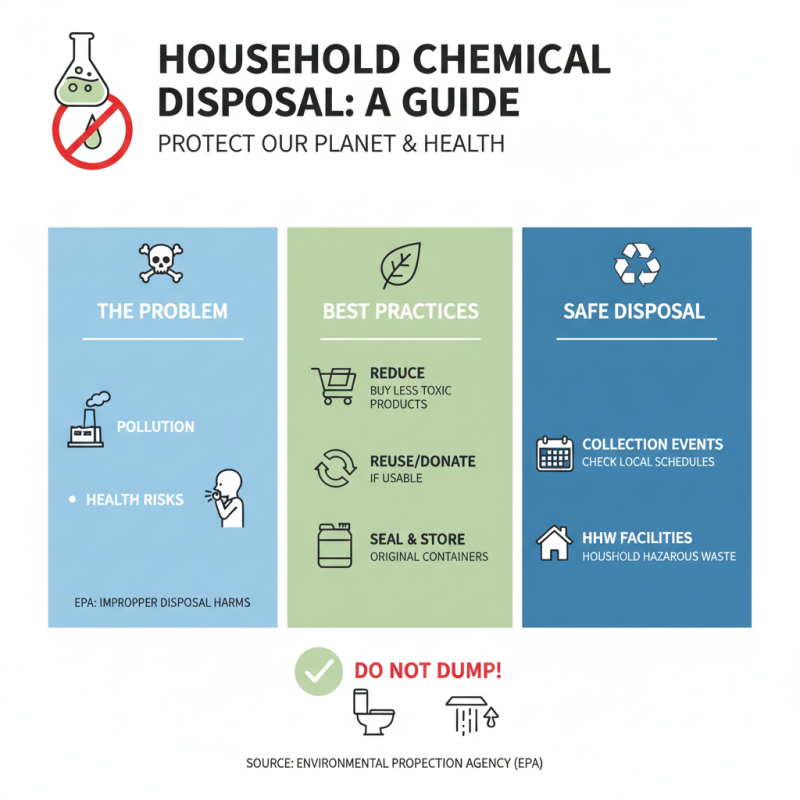
Disposing of household chemicals poses a challenge. Many homeowners lack knowledge on safe methods. The Environmental Protection Agency (EPA) reports that improper disposal can harm the environment and human health. It’s essential to follow best practices.
Avoid pouring chemicals down the drain. This can result in water contamination. Instead, ensure you store unused or expired products in their original containers. Seal them tightly. If labels disappear, label them clearly. Store them away from children and pets.
**Tip**: Check local guidelines for household hazardous waste. Many communities have designated disposal sites.
Don’t mix different chemicals. This can cause dangerous reactions. Furthermore, never throw chemicals in standard trash. The EPA states that about 1.3 million tons of household hazardous waste is generated annually. It’s crucial to find safe alternatives.
**Tip**: If unsure about disposal, contact local waste management facilities. They can provide accurate information.
Taking the time to dispose of chemicals properly can prevent accidents and protect ecosystems. Be proactive in informing neighbors and friends, as many may not know these dangers. Small efforts lead to significant changes.
Disposal Options: Recycling, Incineration, and Landfilling
Disposing of chemicals safely is crucial for environmental protection. Various methods exist, each with its own pros and cons. Recycling is one of the most sustainable options. In fact, the U.S. Environmental Protection Agency (EPA) reports that recycling can reduce hazardous waste by up to 70%. This method not only minimizes landfill use but also conserves resources. However, not all chemicals are recyclable. Some may require extensive processing, making recycling less viable.
Incineration serves as another disposal method. It effectively reduces the volume of hazardous waste by 90%. However, emissions from incineration can be problematic. Toxic gases may be released, impacting air quality. The EPA suggests that modern incineration facilities employ advanced filtration systems. Still, the public often expresses concern regarding air pollution. This highlights the need for ongoing evaluations of incineration practices to ensure safety.
Landfilling is the final option for chemical disposal. While it is often seen as the simplest approach, it poses significant risks. Chemicals buried in landfills can leach into the soil and groundwater. According to a recent study, about 25% of hazardous waste in landfills can contaminate groundwater supplies. This raises questions about long-term effects and the need for stricter regulations. Each method has its challenges. Continuous improvement in technology and practices is essential for better environmental outcomes.