What is the Caesium Clock and Why is it Important in 2026?
The Caesium Clock stands as a pivotal innovation in precision timekeeping. This technology underpins global positioning systems, telecommunications, and scientific research. Reports estimate that in 2026, the demand for precise time measurements will surge by over 25%. The reliance on the Caesium Clock will only intensify amidst this data explosion.
Caesium Clocks utilize the vibrations of Caesium atoms to achieve unprecedented accuracy. Currently, these clocks can measure time to an accuracy of 1 second over billions of years. Such precision is crucial for various applications, from maintaining satellite orbits to synchronizing financial transactions. As industries depend on accurate timing, any minor discrepancies can lead to significant issues.
While the Caesium Clock represents a triumph of technology, it also raises questions about reliance on atomic precision. Some argue that over-reliance might create vulnerabilities. In the face of rapid advancements, continuous improvements in timekeeping are essential. The potential for error, however minute, warrants reflection on our dependence on such innovations. Balancing precision with resilience is increasingly challenging as we move toward 2026.
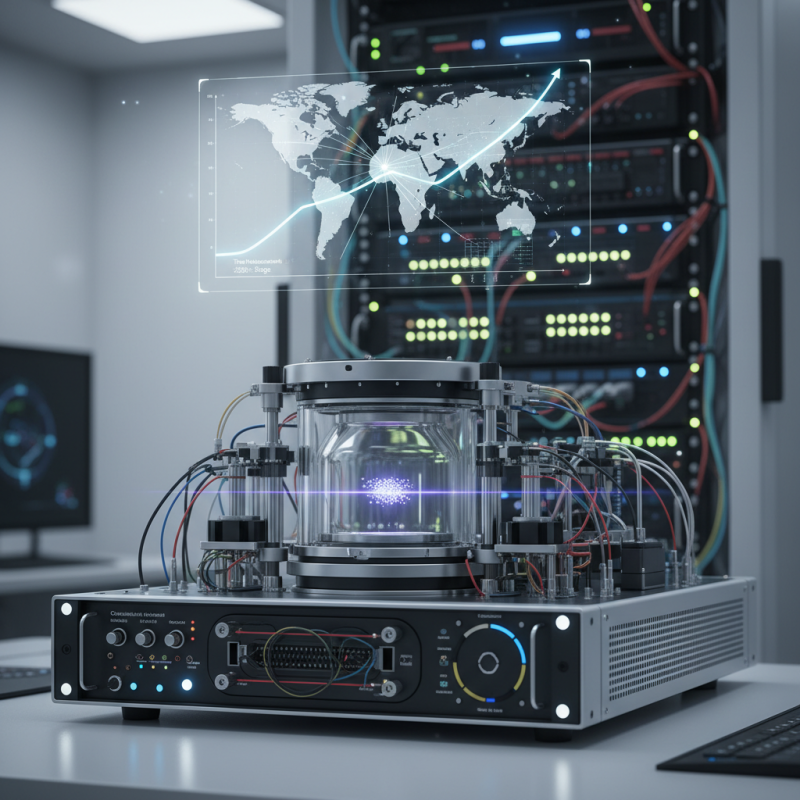
What is a Caesium Clock and Its Principle of Operation
The caesium clock is a remarkable device used to measure time with extreme precision. It operates based on the vibrations of caesium atoms. These atoms oscillate at a constant frequency. This frequency, about 9.19 billion cycles per second, serves as the foundation for defining the second. By aligning this oscillation with a microwave signal, the clock achieves incredible accuracy.
The importance of the caesium clock cannot be overstated. It plays a crucial role in global positioning systems (GPS) and telecommunications. Accurate timekeeping ensures that signals are synchronized. Any delay can lead to errors in positioning and data transmission. As we move closer to 2026, the demand for precise timing will only increase. Technologies dependent on accurate time will require better instruments.
However, the caesium clock isn't perfect. Its maintenance can be complex and costly. Researchers continuously seek improvements. New atomic clocks, like optical lattice clocks, show promise. But they are still in development. The balance between cost and accuracy remains a challenge. As we advance, these reflections on current technology will guide future innovations.
Historical Development of Caesium Clocks and Their Evolution
The development of caesium clocks began in the mid-1950s. Initially, the technology was a breakthrough in precision timekeeping. Researchers discovered that caesium atoms oscillate at a specific frequency, allowing for unprecedented accuracy. The first caesium atomic clock was built in 1955. It gained attention for exceptional time measurement capabilities, achieving accuracy within a second over 300 years.
Over the decades, caesium clocks evolved significantly. By 1970, advancements improved their precision to within a second over 1.5 million years. Reports from the International Bureau of Weights and Measures indicate that these clocks contribute to our global time standards. The transition from mechanical clocks to atomic models marked a turning point in science and technology. As we approach 2026, researchers are refining these devices further, hoping to reach even greater accuracy levels.
Despite their precision, caesium clocks are not without challenges. Environmental factors can interfere with their readings. Also, the complexity of their design raises concerns about accessibility and practical application. Continued investment in research is crucial, as is addressing inefficiencies in current models. The pursuit of more accurate timekeeping is a reminder of our ongoing quest for precision in an ever-evolving technological landscape.
Significance of Caesium Clocks in Timekeeping and Navigation
Caesium clocks serve as the backbone of modern timekeeping. They are pivotal in global navigation systems and scientific research. These clocks use the vibrations of caesium atoms, ticking with remarkable precision. According to the National Institute of Standards and Technology, a caesium clock's accuracy can be up to one second every 30 million years. This precision is crucial for GPS technology, which relies on accurate time for determining positions.
In 2026, the demand for precise timing will escalate. As we integrate more technology into daily life, disparities in timekeeping could lead to significant errors in navigation. For example, self-driving cars depend on precise timing. Even a minor error can cause dangerous situations. Additionally, the rise of quantum computing could rely on the same precise measurements. Acknowledging these facts, we see the importance of enhancing caesium clock technology further.
Notably, challenges remain. Current caesium clocks, while accurate, face limitations. Newer technologies are being explored, but they are not yet widely adopted. The transition from traditional methods to more advanced systems presents a hurdle. The race for better timekeeping continues, with hopes of even greater accuracy on the horizon. The relevance of caesium clocks will remain, yet questions linger about future alternatives.
Importance of Caesium Clocks in Timekeeping and Navigation (2026)
Caesium clocks play a critical role in timekeeping and navigation by providing an unparalleled level of accuracy. As we move towards 2026, advancements in cesium clock technology lead to a significant improvement in accuracy, reducing errors to just 6 microseconds per day.
Applications of Caesium Clocks in Modern Technology
Caesium clocks are pivotal in modern technology. They serve as the gold standard for timekeeping. These highly accurate clocks are based on the vibrations of caesium atoms. They can maintain precision to within one second over millions of years. This accuracy is essential for global positioning systems (GPS).
In 2026, the role of caesium clocks is set to expand further. They provide the necessary timing for telecommunications. Accurate time signals ensure smooth data transmission. According to industry reports, the demand for high-precision timekeeping will rise by 20% in the coming years. This change reflects the growth in IoT devices and smart technologies.
Furthermore, caesium clocks play a crucial role in scientific research. Experiments in physics often require precise measurements. They enable advancements in quantum computing and deep-space exploration. The challenges remain, though. Continued reliance on these clocks raises questions about potential obsolescence. As technology evolves, there may be a need for even more responsive systems. Addressing this may lead to breakthroughs in timekeeping technology.
Future Prospects and Innovations in Atomic Timekeeping by 2026
The Caesium Clock is crucial for precise timekeeping. By 2026, advancements in this technology could reshape various industries. Accurate timekeeping allows GPS systems to function seamlessly. This precision is vital for navigation and communication industries. Today’s Caesium clocks measure time to within a billionth of a second.
Experts predict that improvements in atomic timekeeping will enhance satellite technology. These innovations will play a vital role in scientific research. A report from the European Space Agency emphasizes the need for such precision. They project that improvements could lead to a 20% increase in satellite efficiency by 2026.
Tips: To stay updated, follow industry publications. Join forums that discuss atomic timekeeping advancements. Engaging with professionals can provide insights into future developments. It’s essential to understand the limitations too. Not every innovation leads to immediate benefits. In the realm of timekeeping, some issues still need addressing.