What Is Chemistry Chemicals Exploring Common Types and Their Applications
Chemistry is a fundamental branch of science that delves into the composition, structure, properties, and changes of matter. Within this realm, "chemistry chemicals" play a pivotal role in a variety of applications, ranging from pharmaceutical developments to industrial manufacturing processes. According to the International Council of Chemical Associations (ICCA), the global chemical industry is projected to grow to approximately $5 trillion by 2030, underscoring the critical importance and widespread utility of chemistry chemicals in everyday life.
Dr. Emily Johnson, a renowned expert in chemical engineering, highlights the significance of these substances by stating, "Understanding chemistry chemicals is essential for innovation across various sectors, including healthcare, agriculture, and energy." This assertion emphasizes the increasingly vital role that chemistry chemicals play in driving advancements that enhance our quality of life and contribute to sustainable practices. As researchers and industries continue to explore and exploit various types of chemistry chemicals, the potential for groundbreaking applications remains vast and largely untapped, promising a future rich with opportunities for scientific discovery and technological advancement.
Basics of Chemistry: Understanding the Definition and Importance of Chemicals
Chemistry, often described as the "central science", plays a pivotal role in understanding the substances that make up our world and the interactions between them. At its core, chemistry is the study of matter, its properties, composition, reactions, and the energy changes that occur during these processes. Chemicals, the building blocks of matter, can be natural or synthetic, and their study reveals crucial insights into both the structure and behavior of various compounds. Understanding these elements is essential for various scientific disciplines, including biology, physics, and environmental science.
The importance of chemicals extends beyond academic inquiry; they are integral to numerous applications in everyday life. From the medications that improve health outcomes to the materials that drive technological advancements, the impact of chemistry is profound. For example, understanding chemical reactions allows scientists to develop better fertilizers for agriculture, innovate new materials for construction and manufacturing, and create more efficient energy sources. By grasping the basics of chemistry and the myriad types of chemicals, we can appreciate their role in improving our quality of life and addressing global challenges, such as sustainability and health.
Common Types of Chemicals: Classification by Organic and Inorganic Categories
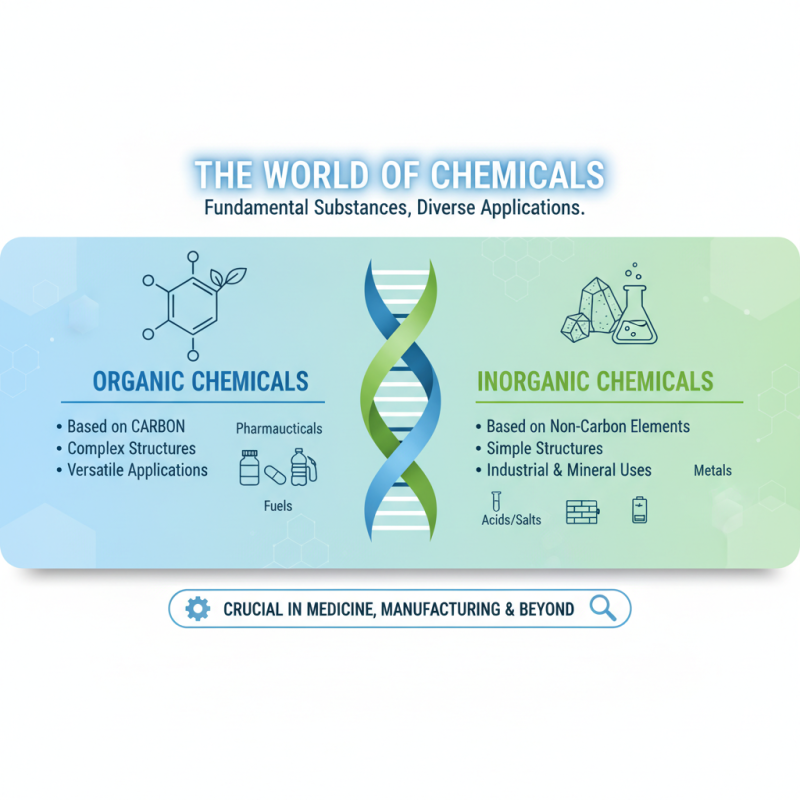
Chemicals are fundamental substances that play a crucial role in various fields, from medicine to industrial manufacturing. They can be broadly classified into two main categories: organic and inorganic chemicals. Organic chemicals primarily consist of carbon and include a vast array of compounds such as hydrocarbons, alcohols, and acids. These compounds are pivotal in everyday life; for instance, they form the basis of pharmaceuticals, plastics, and fuels. The versatility of organic chemicals arises from their ability to form complex structures, leading to diverse chemical behaviors and applications.
In contrast, inorganic chemicals encompass a wide range of substances that typically do not contain carbon-hydrogen bonds. This category includes metals, minerals, salts, and various gases. Inorganic chemicals are vital in several applications, such as catalysts in chemical reactions, fertilizers in agriculture, and materials in construction. Moreover, they often serve as essential components in electronics and ceramics. The distinction between organic and inorganic chemicals is not merely academic; it reflects the diverse properties and potential uses of these compounds, emphasizing the importance of chemistry in understanding and manipulating the materials that make up our world.
Applications of Chemicals in Everyday Life: From Household Products to Industry
Chemicals play a pivotal role in our daily lives, from the products we use at home to the materials that drive industries. According to a report by the American Chemistry Council, the U.S. chemical industry generated over $760 billion in revenue in 2020, demonstrating its significance in the global economy. Household chemicals, such as detergents, cleaning agents, and personal care products, account for a substantial segment of this market. For example, the demand for eco-friendly cleaning products has surged, with consumers increasingly looking for sustainable alternatives that do not compromise cleaning efficacy.
In industrial applications, chemicals are essential for manufacturing a wide array of products, including plastics, fertilizers, and pharmaceuticals. The global market for industrial chemicals is projected to exceed $5 trillion by 2025, driven by the rapid growth in construction, automotive, and agricultural sectors. Specialty chemicals, which are designed for specific functions, are particularly important, with their market estimated to reach $1 trillion by the same year. This highlights not only the versatility of chemicals but also their critical role in enhancing productivity and efficiency across various industries.
Current Trends in Chemical Research: Innovations in Sustainable Chemistry
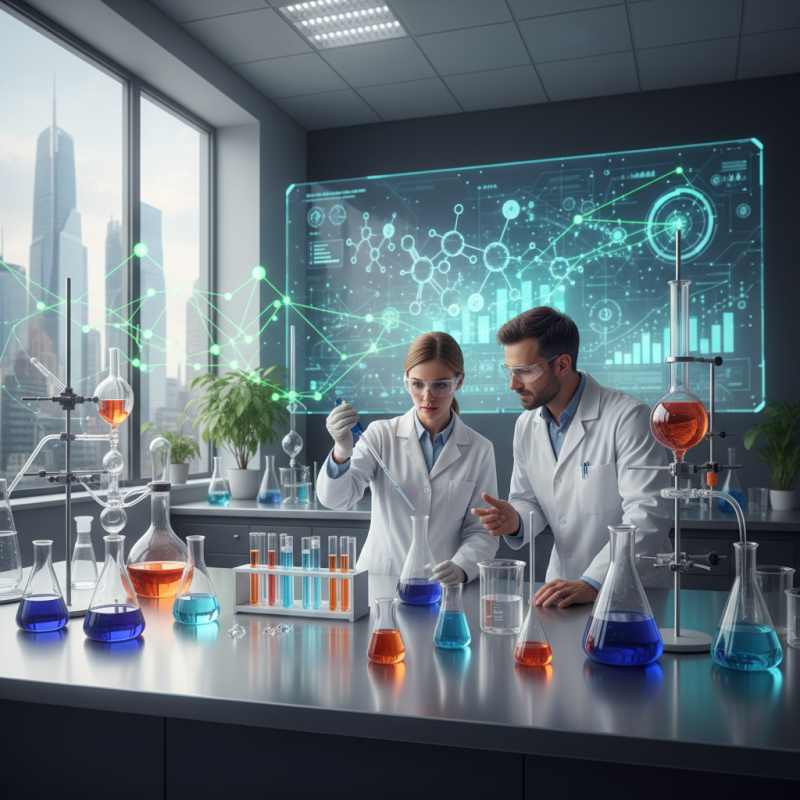
Current trends in chemical research indicate a significant shift towards sustainable chemistry as scientists and researchers strive to address pressing environmental challenges. Innovations in this field focus on developing methods and materials that minimize ecological impact while maximizing functional efficiency. For instance, researchers are exploring biodegradable polymers derived from renewable resources, which can reduce plastic pollution. Additionally, the advancement in green synthesis techniques eliminates harmful solvents and reduces energy consumption, paving the way for more sustainable chemical processes.
Another key area of exploration is the application of catalysis in sustainable chemistry. Enhanced catalytic processes can enable the conversion of abundant feedstocks into valuable chemicals with lower environmental footprints. By improving reaction efficiency and selectivity, these innovations contribute to resource conservation and waste reduction. The integration of artificial intelligence and machine learning into chemical research is also fostering the discovery of new compounds and materials that can be utilized in energy storage, carbon capture, and other vital applications. These trends represent a paradigm shift towards a more environmentally responsible scientific approach, emphasizing the crucial role of chemistry in sustainable development.
Current Trends in Chemical Research: Innovations in Sustainable Chemistry
Safety and Regulations in Chemical Usage: Ensuring Public Health and Environment
In recent years, the emphasis on safety and regulations in chemical usage has become increasingly vital as industries strive to protect public health and the environment. According to a report by the American Chemical Society, nearly 1.5 million people are currently employed in chemical manufacturing across the United States, highlighting the sector's vast influence on everyday life. With this scale of production, appropriate safety measures and regulatory frameworks are essential to mitigate risks associated with chemical exposure. Comprehensive safety protocols, guided by the Occupational Safety and Health Administration (OSHA), help to ensure that workers are not exposed to dangerous substances.
The Environmental Protection Agency (EPA) plays a crucial role in overseeing chemical safety regulations. The EPA's ChemView database provides accessible information on chemical substances and their safety data sheets, allowing both industries and consumers to make informed decisions. A recent study outlined that proper regulation cuts down incidents related to chemical spills and toxic exposure by more than 30%, thereby protecting aquatic ecosystems and reducing healthcare costs associated with chemical-related illnesses. As such, ongoing advancements in regulatory practices are essential for ensuring a balance between industrial innovation and environmental stewardship. The integration of safety into chemical ingredients and applications reflects a growing recognition of our collective responsibility towards maintaining a sustainable and healthy environment.
What Is Chemistry Chemicals Exploring Common Types and Their Applications - Safety and Regulations in Chemical Usage: Ensuring Public Health and Environment
| Chemical Type |
Common Uses |
Safety Regulations |
Environmental Impact |
| Acids |
Industrial cleaning agents, pH adjusters |
Must be handled with PPE; proper storage required |
Can cause soil and water contamination |
| Bases |
Soap production, drain cleaners |
Requires protective equipment; labeling guidelines must be followed |
Potential for aquatic toxicity |
| Solvents |
Paint thinners, degreasers |
Use in well-ventilated areas; avoid ignition sources |
Volatile organic compounds can harm air quality |
| Oxidizers |
Bleaching agents, rocket propellants |
Store away from combustibles; emergency protocols essential |
Risk of explosions if improperly handled |
| Heavy Metals |
Batteries, pigments |
Strict disposal regulations; monitoring for exposure |
Bioaccumulation poses severe ecological risks |