How to Choose Superior Chemical Solutions for Your Needs?
Choosing superior chemical solutions is vital for industries today. Expert Dr. James Worthington says, "Quality chemicals can transform operations." This statement highlights the need for careful selection.
Understanding your needs is the first step. Various industries require specific compounds tailored to their processes. For example, a pharmaceutical company may need a solution that complies with strict regulations. This demand adds complexity, making the choice more challenging.
It’s crucial to assess suppliers thoroughly. Some companies promise superior chemical solutions but fail to deliver. Their inconsistencies can lead to production delays and increased costs. Investigating customer reviews and requesting samples can reveal a supplier’s true capability.
Identify Your Specific Chemical Needs and Applications
Choosing the right chemical solutions begins with understanding specific needs. Various industries have unique requirements. For example, the agricultural sector often seeks fertilizers that enhance soil health. According to a report from the International Fertilizer Industry Association, effective nutrient management can increase crop yields by up to 30%. This emphasizes the importance of tailoring chemical choices to specific agricultural applications.
In the manufacturing sector, chemicals must meet safety and environmental standards. A study by the American Chemistry Council found that 75% of businesses experienced challenges in sourcing compliant materials. Companies often struggle with balancing cost and quality. They might select a cheaper option, only to face compliance issues later. This could lead to costly delays in production. Reflecting on these challenges, it’s clear that understanding the nuances of chemical properties and their applications is crucial.
Identifying your specific needs is an iterative process. It involves testing and feedback. Engaging with suppliers and conducting thorough research can help clarify what works best. Yet, many firms overlook the need for ongoing assessment. Trends in sustainability highlight this gap. A recent survey indicated that only 40% of companies continuously adapt their chemical choices based on new regulations. This calls for greater attention to evolving standards and technologies in chemistry.
Research Different Types of Chemical Solutions Available
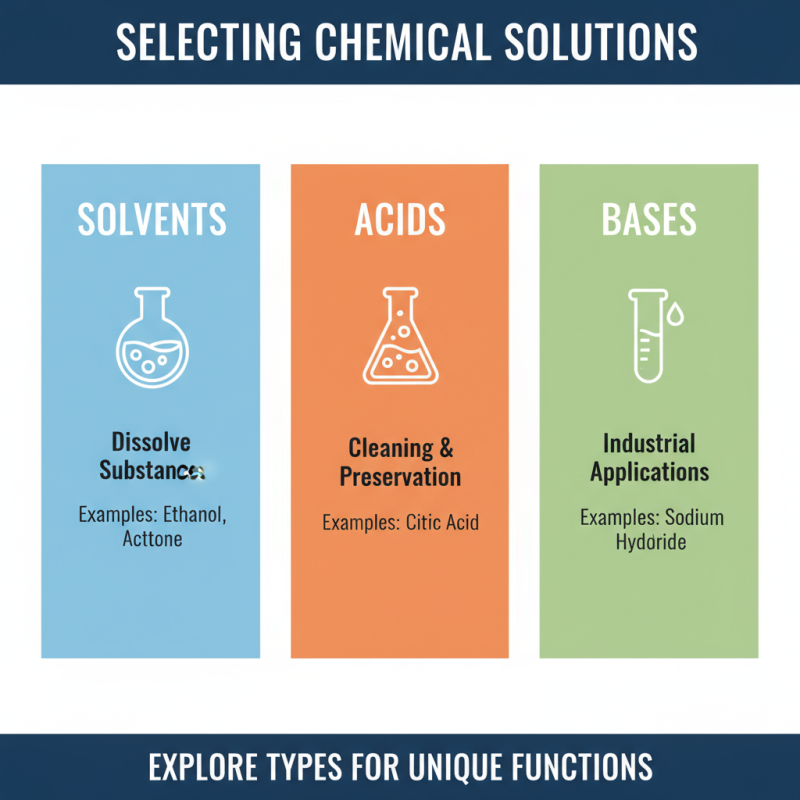
When selecting chemical solutions, exploring the different types available is crucial. There are versatile solvents, acids, and bases, each serving unique functions. Solvents like ethanol or acetone dissolve substances effectively. Acids, such as citric acid, can be used for cleaning or food preservation. Bases, like sodium hydroxide, help in various industrial applications.
It's essential to consider the chemical properties of each solution. Some are volatile, while others are stable. Understanding their reaction potential is key. For instance, combining certain chemicals can create hazardous reactions. A lack of awareness can lead to serious safety issues. Being cautious and informed helps mitigate risk.
Additionally, think about your specific needs. Are you looking for cleaning agents or chemical reactants? Each type has its strengths and weaknesses. The decision should align with your goals. Sometimes, you may need to experiment to find the perfect fit. Embrace the learning process; it’s where growth occurs.
Evaluate Supplier Reliability and Product Quality
When selecting chemical solutions, evaluating supplier reliability is crucial. Not all suppliers provide the same quality. Start by checking their history. Look for reviews and testimonials. A supplier with a solid reputation often indicates consistency in product quality.
Tips: Ask for references. Speak directly to other clients about their experiences. A reliable supplier should be transparent about their processes. Verify their certifications. This can indicate their commitment to safety and quality.
Don’t overlook quality control measures. Suppliers should have stringent testing protocols. Check if they regularly test their products for purity and performance. If there’s a lack of information, reconsider your choice. Sometimes, less reputable suppliers may offer lower prices but compromise on quality.
Tips: Schedule site visits if possible. Seeing operations firsthand can reveal a lot. You might find areas where they excel or fall short. Don’t ignore red flags. Trust your instincts when something feels off. Always prioritize safety and efficacy in your selection process.
Consider Safety and Regulatory Compliance Factors
When selecting chemical solutions, safety and regulatory compliance are essential considerations. The wrong choice can lead to accidents or legal issues. Always check the safety data sheets (SDS) for information on hazards. Ensure that the chemicals meet local regulations. This can avoid fines and ensure a safer work environment.
It's also crucial to consider the long-term impact of using these chemicals. For instance, some may have hidden environmental effects. They can harm ecosystems and human health. It’s valuable to ask suppliers about their sustainability practices. How do they source their materials? Are there alternatives that are safer for the environment?
Many companies overlook these aspects. They may focus only on cost or availability. This can lead to regret later on. Taking the time to research can save resources and improve safety. Reflecting on your choices is important. In the end, the right chemicals should not only meet your needs but also ensure compliance and promote safety.
How to Choose Superior Chemical Solutions for Your Needs? - Consider Safety and Regulatory Compliance Factors
| Chemical Type |
Safety Rating |
Regulatory Compliance |
Application Area |
Environmental Impact |
| Acetic Acid |
Moderate |
FDA, EPA |
Food Processing |
Biodegradable |
| Sodium Hydroxide |
High |
OSHA, EPA |
Manufacturing |
Moderate |
| Hydrochloric Acid |
High |
EPA |
Cleaning Agents |
Potentially Harmful |
| Ethanol |
Low |
FDA, EPA |
Pharmaceuticals |
Biodegradable |
| Ammonium Nitrate |
Moderate |
DOT, EPA |
Agriculture |
Moderate |
Assess Cost-Effectiveness and Long-Term Value
When choosing chemical solutions, assessing cost-effectiveness and long-term value is crucial. A recent report from the American Chemical Society suggests that improper selection can lead to increased operational costs by up to 30%. Lower initial prices may tempt businesses, but these choices often result in higher expenses over time due to performance issues and maintenance needs.
Tips: Always calculate the total cost of ownership. This includes not just the purchase price, but also energy consumption, disposal fees, and potential downtime. A quality solution might have a higher upfront cost, but savings in efficiency can make it worthwhile.
Evaluate whether the solution aligns with industry standards. Research shows that compliant solutions can reduce regulatory risks. A firm’s failure to consider compliance can cost thousands in fines. Analyzing environmental impact is equally important; sustainable choices often lead to reputational benefits that can enhance long-term profitability.
Tips: Conduct a lifecycle analysis of your chemical choices. Understand how your decision affects profitability over time. The right solution should not only solve immediate issues but also support sustainable practices and cost savings in the future. Reflect on past decisions. Learning from what did not work is essential for improvement.
Cost-Effectiveness of Chemical Solutions for Various Applications