How to Choose the Best Chemical Cleaning Solutions for Your Needs?
In the world of chemical cleaning, finding the right solution is essential. Dr. Emily Thompson, a leading expert in industrial cleaning processes, once stated, "Choosing the right chemical cleaning solution can greatly enhance efficiency and safety." This highlights the importance of informed decision-making in this field.
Chemical cleaning products come in various types and formulations. Each product serves specific purposes, from removing grease to sterilizing surfaces. However, not all solutions suit every application. This can lead to trial and error, consuming both time and resources. Thus, understanding your specific needs is crucial.
Many industries rely heavily on effective cleaning solutions to maintain equipment and ensure hygiene. Selecting the wrong product can cause damage or ineffective cleaning. Each choice should be based on thorough research and expert consultation. Reflecting on the products available is key to making optimal decisions in chemical cleaning.

Understanding Your Cleaning Needs and Objectives
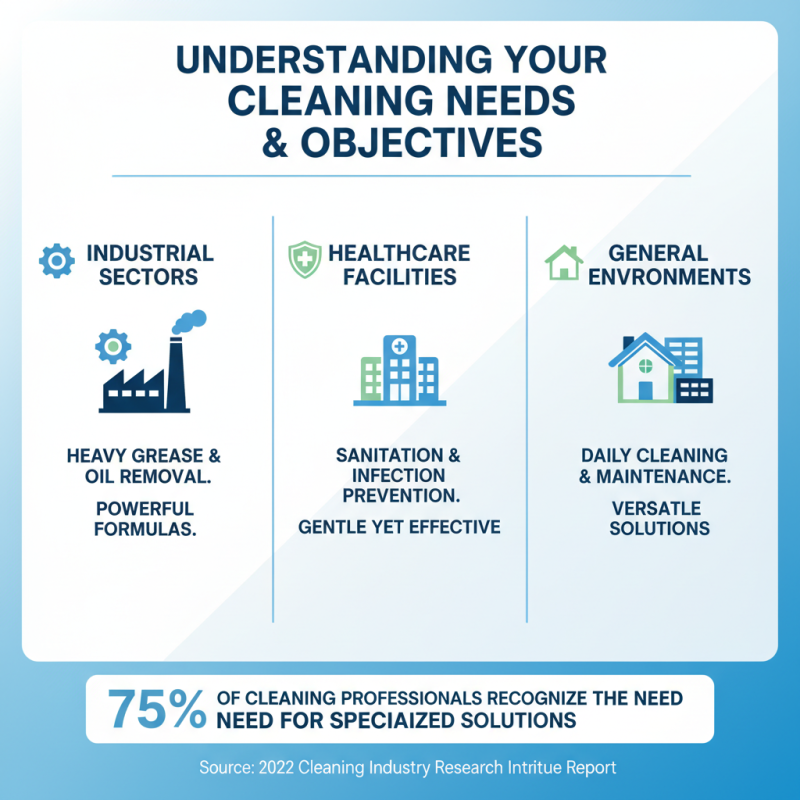
When selecting chemical cleaning solutions, understanding your specific cleaning needs and objectives is crucial. Different environments require tailored approaches. For instance, industrial sectors may demand products that efficiently remove heavy grease and oil, while healthcare facilities prioritize solutions that ensure sanitation and prevent the spread of infections. According to a 2022 report by the Cleaning Industry Research Institute, nearly 75% of cleaning professionals recognize the need for specialized cleaning solutions.
Evaluating the types of surfaces and materials you will clean also plays a significant role. Some solvents may damage certain materials, which can lead to costly repairs. A study from the American Cleaning Institute shows that improper cleaning methods can increase maintenance costs by up to 30%. Environmentally friendly options are becoming more popular, with 60% of cleaning companies now exploring sustainable alternatives.
Reflecting on the purpose of the cleaning task is equally important. Are you looking for immediate results or long-term solutions? Short-term cleaning may focus more on quick efficacy, while long-term solutions might prioritize safety and residue-free formulas. Balancing effectiveness with safety can be challenging, but it is vital for achieving the best results in your cleaning endeavors.
Evaluating Different Types of Chemical Cleaning Solutions
When evaluating different types of chemical cleaning solutions, several factors must be taken into account. Understanding the composition of these chemicals is crucial. For instance, a report by the American Cleaning Institute indicates that over 80% of cleaning agents contain surfactants. These ingredients are essential for breaking down dirt and grime. However, not all surfactants are created equal. Some may be more effective in specific environments, such as commercial kitchens compared to residential spaces.
Environmental impact is becoming a significant consideration in the industry. According to a study published in the Journal of Environmental Management, nearly 70% of consumers prefer eco-friendly cleaning products. These solutions often utilize biodegradable ingredients, which reduce harmful residues in wastewater. However, the effectiveness of eco-friendly alternatives can vary. Some may require longer contact times or more frequent applications, which could be a drawback for some users.
Safety is a vital aspect when selecting chemical cleaners. The Occupational Safety and Health Administration (OSHA) emphasizes that proper handling and usage guidelines are essential to minimizing risks. Many solutions come with Material Safety Data Sheets (MSDS), detailing their properties and potential hazards. Users must reflect on how they can implement safe practices, especially in shared environments. Choosing the right product is not just about efficiency; it is also about health and sustainability.
Assessing Safety and Environmental Impact of Cleaning Chemicals
When selecting cleaning chemicals, safety and environmental impact should be paramount. According to the U.S. Environmental Protection Agency (EPA), approximately 17% of households use cleaning products that can emit volatile organic compounds (VOCs), contributing to indoor air pollution. These substances can pose health risks such as respiratory issues and skin irritations. Understanding this, consumers should actively seek information about the ingredients in cleaning solutions before use.
Choosing safer alternatives can make a significant difference. Look for options labeled as biodegradable or non-toxic. The Global Chemical Industry report states that eco-friendly cleaning products are expected to grow by 50% over the next five years. This trend reflects a growing awareness among consumers regarding the environmental impact of their choices.
Tips: Always check for certification labels that guarantee safety and environmental commitments. Consider the packaging too; minimize waste by selecting products with recyclable containers. Be cautious; some labels might be misleading. It's essential to research and understand the claims made by manufacturers.
While it’s tempting to choose cheaper options, evaluate the long-term effects on health and the planet. The right choice today can lead to a healthier environment tomorrow. Selecting cleaning solutions is a decision that extends beyond cleanliness; it's about prioritizing well-being for ourselves and future generations.
Comparing Effectiveness and Cost of Various Cleaning Products
Choosing the right chemical cleaning solution is crucial. Understanding effectiveness and cost is essential for making informed decisions. A report by the Cleaning Industry Research Institute states that the effectiveness of cleaning products can vary significantly. Products that are pH balanced can be more effective at removing grease and grime compared to those that are highly acidic or alkaline.
When evaluating cost, consider the concentration of the product. More concentrated solutions tend to be cost-effective. For instance, a 1-gallon container may yield more cleanings than a less concentrated 5-gallon bucket. However, initial costs can be misleading. Often, cheaper solutions require more frequent applications. This may lead to higher long-term expenses.
Tips: Always review product labels for effectiveness claims. Check user reviews and industry reports. Look for independent testing data that confirms the performance of cleaning products. Don't settle for the first option. Instead, compare various solutions to find the best fit. Keep in mind that your specific cleaning needs will dictate which products work best for you. The most expensive option is not always the most effective.
Reading Labels and Certifications for Choosing Quality Solutions
When selecting chemical cleaning solutions, reading labels and certifications is crucial. Labels provide essential information about the ingredients and the intended use of a product. Look for clear, understandable terms. Avoid solutions with vague descriptions or technical jargon. Ingredients should be listed in simple language, allowing you to identify harmful chemicals easily.
Certifications add another layer of trust. They often indicate whether a product meets environmental or safety standards. Look for certifications from reputable organizations. These can showcase whether a solution is biodegradable or free from harmful substances. Checking reviews can help, but they should not be the only source of information. Misleading reviews can lead to poor choices.
Sometimes, even certified products may not work as expected. It is vital to test a small area before full application. Reflect on the outcome. Did it meet your needs? Were there lingering odors or residue? Understanding these details can help refine your choices in the future. Choosing the right chemical cleaning solutions requires attention to detail and a willingness to adjust your approach.
Choosing the Best Chemical Cleaning Solutions by Effectiveness