Essential Tips for Safe Chemical Disposal Methods?
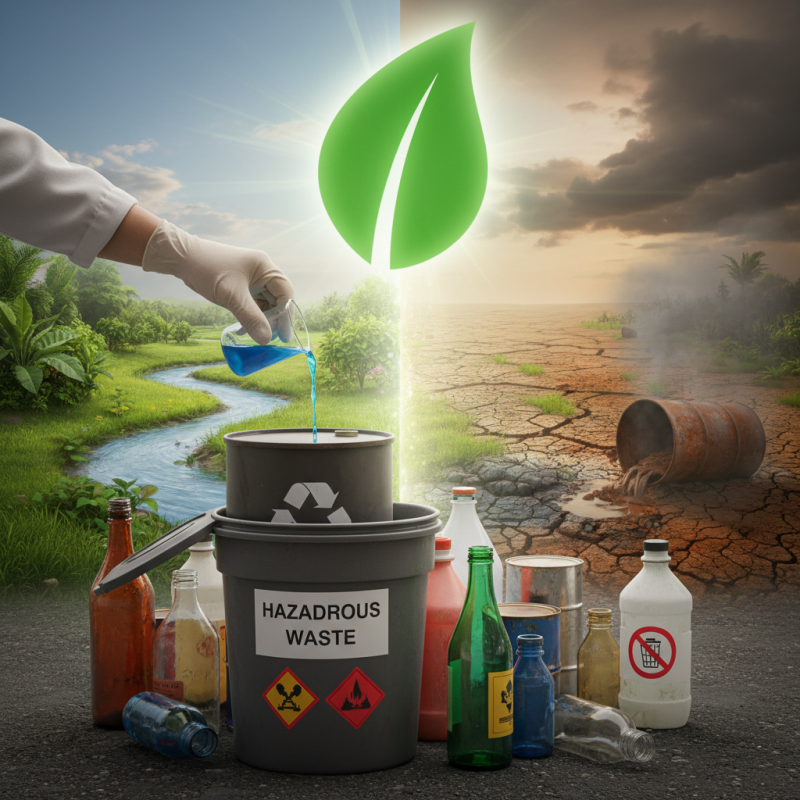
Chemical disposal is a critical yet often neglected aspect of environmental care. Many individuals overlook the importance of proper disposal methods. Unseen dangers lurk within improperly discarded substances, posing significant risks to our surroundings. Awareness is essential for effective chemical disposal.
Disposing of chemicals rashly can lead to contamination in soil and water. Think about the countless times hazardous materials are tossed in regular trash. This creates a ticking time bomb beneath our feet. Understanding safe disposal methods helps mitigate these risks.
It's crucial to recognize that not all chemicals behave the same. Some may require special handling or treatment. Simple disposal might seem easy, but it often leads to greater issues. As we dive into essential tips for safe chemical disposal, let’s reflect on our habits. Each thoughtful action can significantly impact our environment.
Understanding the Importance of Safe Chemical Disposal
Safe chemical disposal is crucial in protecting both human health and the environment. According to a report by the Environmental Protection Agency (EPA), improper disposal can contaminate water sources and harm wildlife. Each year, millions of tons of hazardous waste are generated in the United States alone. Yet, many individuals and businesses are unaware of proper disposal methods.
For instance, approximately 60% of small businesses do not follow the right guidelines for their waste, leading to serious ecological consequences. Disposal practices vary greatly. Employees may mix chemicals or dispose of them in regular trash, thinking it is harmless. This misunderstanding can pose serious risks. In fact, a study revealed that nearly 30% of chemical spills occur due to improper disposal techniques.
Basic awareness and education on safe disposal methods can make a significant difference. Simple steps like labeling waste containers clearly can prevent accidents. Furthermore, utilizing designated collection facilities ensures that chemicals are handled safely. Awareness campaigns can also drive the message home, emphasizing that everyone's actions matter in maintaining a safe environment. Reflecting on our own practices may lead to more responsible behaviors.
Essential Tips for Safe Chemical Disposal Methods
| Tip |
Description |
Importance |
| Know Your Chemicals |
Understand the specific properties and hazards associated with each chemical. |
Prevents accidents and ensures proper handling procedures. |
| Read Labels |
Always read the disposal instructions on chemical labels carefully. |
Ensures compliance with legal requirements and safety guidelines. |
| Utilize Hazardous Waste Facilities |
Take chemicals to designated hazardous waste disposal sites. |
Safeguards the environment and public health. |
| Avoid Mixing Chemicals |
Never mix different chemicals unless known to be safe. |
Reduces risk of dangerous reactions or releases. |
| Seal Containers Properly |
Ensure all chemical containers are sealed and labeled correctly. |
Prevents leaks and exposure during transport. |
Identifying Different Types of Hazardous Chemicals
When dealing with hazardous chemicals, identification is crucial. Common types include solvents, acids, and heavy metals. Each type poses unique risks and requires different disposal methods.
Solvents, often found in cleaning products, can be flammable and harmful to health. Acids, like battery acid, can cause severe burns and damage the environment. Heavy metals, such as lead and mercury, need special care due to their toxicity.
Recognizing these hazardous materials allows for better safety practices. Improper disposal often leads to contamination. For instance, pouring chemicals down the drain can pollute water sources. Personal protective equipment, like gloves and masks, should be worn. This helps minimize exposure during handling. However, many neglect this precaution. It's essential to stay vigilant.
Regular training on safe chemical disposal can reduce risks. Additionally, labeling containers clearly is a simple yet effective method to avoid accidents.
In many settings, a lack of awareness persists. People may assume that all chemicals can be disposed of the same way. This is dangerous. Specialist disposal services can provide guidance. Consider reaching out for help if uncertain. When in doubt, ask for advice.
Awareness can make a significant difference in preventing environmental harm.
Step-by-Step Guide to Safe Disposal Procedures
When it comes to disposing of chemicals safely, following a structured approach is crucial. Start by assessing the type of chemical you have. Is it liquid, solid, or gas? Each form requires a different disposal method. Identify local regulations. Many regions have specific guidelines. Knowing these is vital to avoid fines and ensure safety.
Next, gather necessary materials. You might need gloves, goggles, and appropriate containers. Don’t overlook the importance of personal safety. Many people underestimate the risks and ignore protective gear. An accident can happen in seconds.
Here are some tips for safe disposal. Always label containers clearly. This prevents mix-ups and hazards. When pouring chemicals, do it slowly to minimize spills. Take your time; rushing leads to mistakes. If you’re unsure about disposal methods, consult local waste management services. They can provide guidance tailored to your needs. Chemical disposal can be tricky, but being informed helps mitigate risks. Stay safe and responsible.
Essential Tips for Safe Chemical Disposal Methods
Appropriate Containers and Labeling for Chemical Waste
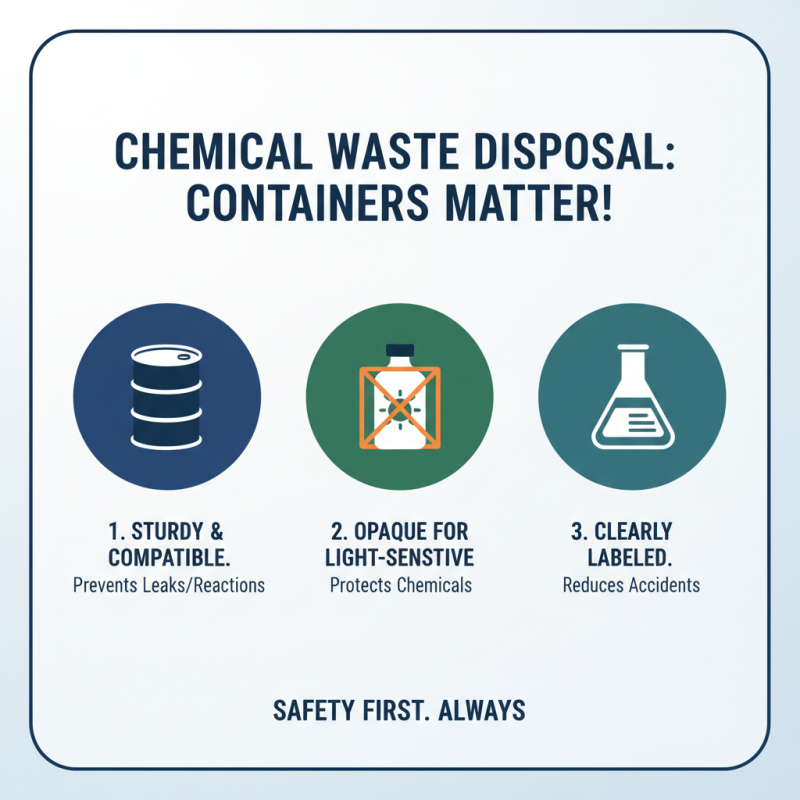
When it comes to disposing of chemical waste, using appropriate containers is vital. Choose containers that are sturdy and compatible with the chemicals inside. For instance, opaque containers are excellent for light-sensitive chemicals. Clearly labeled containers help prevent mishaps, reducing the risk of accidents.
Always use labels that clearly state the contents. Include hazard symbols if necessary and the date of disposal when possible. This practice helps anyone handling the containers to understand the risks. Avoid vague terms like “waste” or “stuff.” Specificity is crucial.
Consider these tips for best practices. Never reuse old containers without proper cleaning. Dispose of organic solvents separately from inorganic chemicals. When in doubt, consult your local guidelines. Safety should always come first. Think about the environment as well; ensure disposal methods minimize contamination risk. This way, you're contributing to a safer, cleaner space for everyone.
Resources for Safe Chemical Disposal and Local Regulations
When it comes to the safe disposal of chemicals, knowing local regulations is crucial. Each community may have specific guidelines on what can be disposed of and how. Local waste management departments often provide resources that detail these regulations. Research your area’s rules regarding chemical disposal. Some municipalities hold regular collection events. Participating in these events can ensure responsible disposal.
Understanding where to dispose of chemicals is just as important as knowing the rules. Many areas have designated drop-off locations. Check with local authorities or environmental agencies for a list of these sites. It may be inconvenient to drive there, but it is necessary. Improper disposal can lead to environmental contamination.
Here are a few tips for safe chemical disposal:
- Always label containers clearly.
- Keep chemicals in their original containers when possible.
- Never mix different types of hazardous materials.
- Take time to read safety data sheets for guidance on handling and disposal.
These steps can prevent accidents and ensure compliance with regulations.