How to Rely on Superior Strategies for Success?
In today’s competitive landscape, organizations must learn to "rely on superior" strategies for sustainable success. Research from McKinsey highlights that companies leveraging innovative strategies achieve a 20% higher growth rate than their peers. It’s crucial to understand that merely following trends can lead to stagnation. Companies need to innovate and adapt continuously, or risk losing their market position.
The Harvard Business Review indicates that strategic agility is essential for overcoming challenges. Yet, many firms still struggle with implementation. Those who maximize their resources effectively show nearly 30% better performance. It’s a stark reminder of how easily businesses can falter without thoughtful strategy. Reflection is key; even successful companies must evaluate their approaches constantly.
To truly excel, leaders must not only rely on data-driven insights but also on creative strategies tailored to their unique circumstances. This balance between analysis and innovation often separates the winners from the rest. As we explore the principles behind relying on superior strategies, consider how reflective practices can guide decision-making processes in your organization.

Understanding the Importance of Superior Strategies for Success
In today’s competitive landscape, superior strategies are vital for achieving success. Understanding their importance can clarify how businesses thrive. Research shows that companies employing strategic planning gain a 30% increase in productivity. This statistic highlights the profound impact of strategic methods on overall performance.
Tips for developing superior strategies:
Start by analyzing your current position. Identify strengths and weaknesses. You can't improve what you don't understand. Furthermore, engage your team in brainstorming. Fresh perspectives may reveal unseen opportunities.
Another critical factor is adaptability. Markets evolve rapidly. A rigid strategy can lead to missed chances. According to a recent study, 60% of executives believe adaptability is key to growth. It’s essential to regularly assess and adjust your strategies to stay relevant.
Remember, perfection is not the goal. Sometimes, strategies will fail. Learning from these failures is crucial. Reflect on mistakes and adapt accordingly. This ongoing process of improvement can lead to long-term success.
How to Rely on Superior Strategies for Success? - Understanding the Importance of Superior Strategies for Success
| Strategy Name |
Description |
Key Benefits |
Implementation Steps |
| Market Analysis Strategy |
Conduct thorough market research to identify trends and consumer needs. |
Informed decision making, risk mitigation, enhanced competitive advantage. |
1. Collect market data
2. Analyze the findings
3. Develop actionable insights |
| Customer-Centric Approach |
Focus on customer feedback to improve products and services. |
Higher customer satisfaction, increased loyalty, better product relevance. |
1. Gather customer feedback
2. Analyze responses
3. Implement changes based on feedback |
| Innovation Strategy |
Encourage creative thinking and new ideas within the team. |
Competitive edge, enhanced brand image, opportunity for new markets. |
1. Foster a culture of innovation
2. Set up brainstorming sessions
3. Assess feasibility of new ideas |
| Digital Transformation Strategy |
Utilize technology to streamline processes and enhance customer engagement. |
Increased efficiency, cost savings, improved customer experience. |
1. Identify key processes for digitization
2. Choose appropriate technologies
3. Train staff and implement |
Identifying Key Components of Effective Strategic Planning
Effective strategic planning involves several key components. A strong foundation starts with clear objectives. A recent survey showed that 70% of organizations with defined goals outperform their peers. These goals should be specific and measurable. Vague targets lead to confusion and misalignment. In fact, 50% of companies without clear strategies report low employee engagement.
Additionally, market analysis is crucial. Understanding trends and customer needs shapes a successful strategy. A report from a leading consulting firm found that 60% of executives prioritize data-driven decision-making. Ignoring consumer feedback can lead to failure. Companies must adapt to changes swiftly. Those that don’t risk becoming obsolete in just a few years.
Another important factor is resource allocation. Properly distributing resources ensures that strategic goals are met. Many organizations struggle with this aspect. During a recent study, 40% admitted to poor resource planning. This indicates a need for reflection. Relying solely on existing frameworks may limit innovation and growth. Companies should embrace flexibility to stay relevant.
Developing a Framework for Evaluating Strategic Options
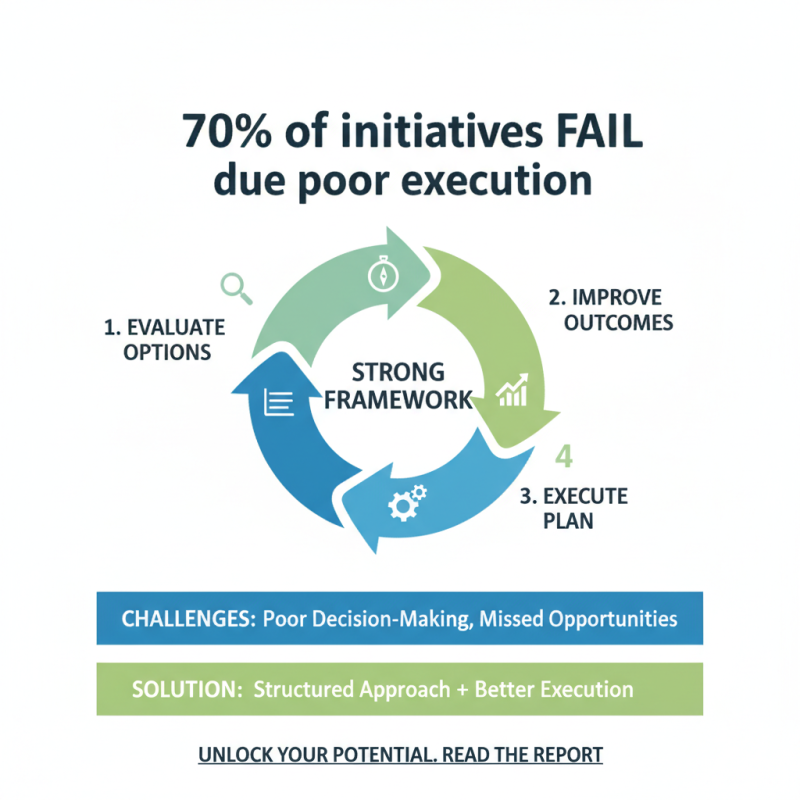
In a competitive landscape, evaluating strategic options is crucial for success. Organizations face numerous challenges when attempting to pinpoint the best path. According to a recent industry report, 70% of strategic initiatives fail due to poor execution. A strong framework can facilitate better decision-making and improve outcomes.
Begin by using the SWOT analysis. This tool allows for a deeper understanding of strengths, weaknesses, opportunities, and threats. Identify what sets your organization apart. Visualize potential obstacles. Understanding these factors can pave the way for smarter strategies.
Tip: Regularly revisit your framework. Adapt it based on market changes and new insights. Flexibility is key. Also, include cross-functional teams in these evaluations. Diverse perspectives often reveal blind spots.
Remember, not all strategies will fit perfectly. The ability to pivot and learn from missteps is vital. Gather feedback consistently, and assess the effectiveness of chosen strategies. A willingness to reflect on past decisions can lead to more informed choices in the future.
Implementing Strategies: Best Practices and Common Pitfalls
Implementing strategies effectively is crucial for success. Many fall into common pitfalls that derail their progress. For instance, overcomplicating plans can lead to confusion. Clarity is essential. Use clear objectives that are easy to track. Small, achievable goals keep motivation high. A focused approach prevents distractions from creeping in.
Another common issue is neglecting feedback. Avoiding constructive criticism can hinder growth. Listen to your team. Their insights can reveal blind spots. Take time to reflect on setbacks. Instead of seeing them as failures, view them as learning opportunities.
Collaboration is vital, but too many meetings can waste time. Streamline communication to ensure efficiency. Utilize digital tools to stay connected. These can foster better discussions without long interruptions. Remember to measure progress regularly. Adjust strategies based on what the data shows. Flexibility is key to adapting and thriving.
Measuring Success: Tools for Assessing Strategic Effectiveness
Measuring success in strategic planning is crucial. Various tools help in assessing how effective strategies are. Metrics, surveys, and feedback loops are essential. They provide insights into performance and areas for improvement. A simple metric, like sales growth, gives clear data. Yet, it may not capture deeper issues.
Surveys can gather employee insights. However, responses may not reflect true feelings. Fear or bias can affect honesty. Thus, consider using anonymous methods. This fosters genuine feedback. Additionally, feedback loops enable continuous improvement. They allow adjustments in strategies based on performance. Regular reviews can highlight what’s working and what isn’t.
Relying solely on data can mislead. Numbers tell part of the story, but context is key. Sometimes, qualitative data offers richer insights. Team discussions might reveal unspoken challenges. Be open to reflection and adjust as needed. Balancing quantitative and qualitative assessments leads to better strategic decisions. Finding this balance is an ongoing journey.