Top 5 Tips for Choosing the Best Vertical Lawn Mower?
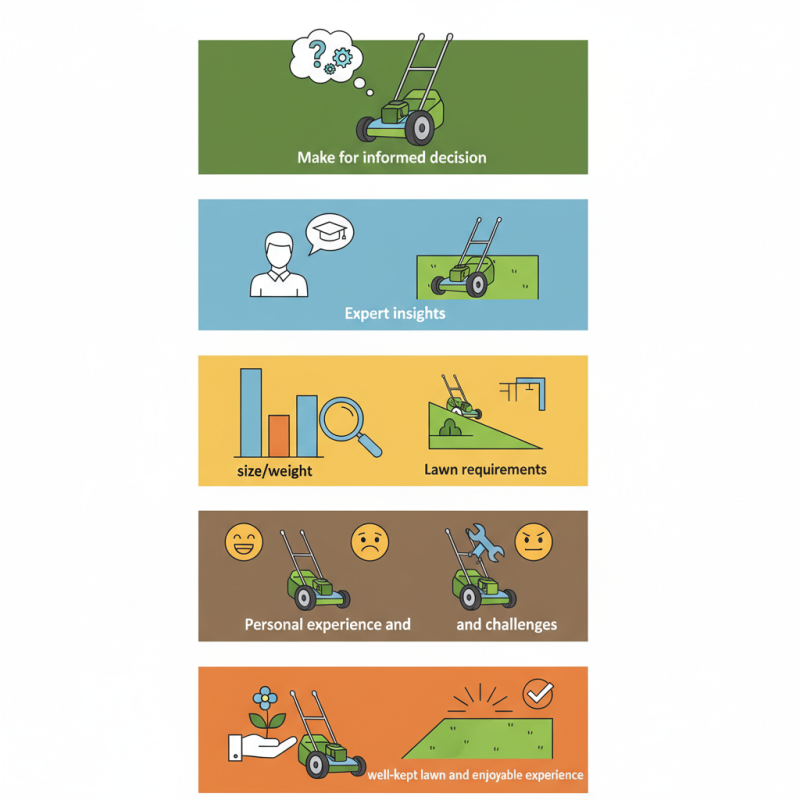
Choosing a Vertical Lawn Mower can be a daunting task. With numerous options available, it's essential to make an informed decision. Lawn care expert, John Green, once stated, "The right mower can transform your lawn care routine." This highlights the importance of selecting a suitable vertical lawn mower tailored to your needs.
Vertical lawn mowers offer unique advantages. They are designed for easy maneuverability and efficient cutting. However, not every model is ideal for everyone. Factors like size, weight, and features matter significantly. It’s critical to evaluate your specific lawn care requirements. Are you dealing with slopes or tight corners? Understanding these aspects helps narrow down your choices.
While expert insights are valuable, personal experience also plays a role. Many users face challenges in finding the perfect fit. Some may find their chosen mower lacks sufficient power, while others might struggle with maintenance. Reflecting on these factors ensures a more satisfying purchase. A thoughtful approach to selecting a vertical lawn mower can ultimately lead to a well-kept lawn and a more enjoyable lawn care experience.
Understanding the Features of Vertical Lawn Mowers
When choosing a vertical lawn mower, understanding its features is crucial. Vertical mowers are designed to cut grass efficiently. They can reach tight spaces and are suitable for uneven terrain. According to a recent industry report, vertical mowers have become increasingly popular, with a market growth rate of 7.5% per year. This growth reflects the preference for efficient lawn care tools.
Key features to assess include cutting height adjustments and blade type. High-quality blades ensure a clean cut, while adjustable heights allow customization. Users often overlook motor power. A powerful motor can significantly reduce mowing time. Data from consumer surveys indicates that 68% of users prioritize motor strength when selecting a mower.
Also, consider weight and handling. Heavier models can be difficult to maneuver. A lighter mower may seem efficient but may lack durability for large yards. Lastly, battery life is paramount in cordless models. Even models boasting high efficiency sometimes fail to perform in extended use. Analyze real user reviews and experiences for a clearer picture before you purchase.
Evaluating the Power Source: Electric vs. Gasoline
When choosing a vertical lawn mower, evaluating the power source is crucial. You typically have two options: electric and gasoline. Each has unique advantages and limitations.
Electric mowers are known for their ease of use and lower environmental impact. They are often lighter and quieter, making them ideal for residential areas. However, consider the cord length or battery life. If you have a large yard, an electric mower might struggle with limited power and range. Charging times can be an issue as well.
Gasoline mowers offer more power and are suitable for larger lawns. They can cover more ground without needing a recharge. However, they produce emissions and require more maintenance. Fueling them can be a hassle. Think about your lawn’s size and your commitment to maintenance before making a decision.
When choosing a mower, reflect on your specific needs. Look at the size of your yard, your willingness to maintain equipment, and your environmental concerns. The right choice balances convenience and effectiveness.
Size and Weight Considerations for Maneuverability
When choosing a vertical lawn mower, size and weight are crucial for maneuverability. A lightweight model makes it easier to navigate tight spaces. If your lawn has uneven terrain or flower beds, consider how the mower will handle these areas. A bulkier mower may struggle where a smaller machine excels.
Smaller mowers can be more comfortable to operate. They require less effort to push and turn. However, larger models often have more power. Think about the balance between power and ease of use. A mower too heavy may tire you out quickly. Always visualize your lawn layout and the mower’s movement.
Also, make sure to measure your storage space. After mowing, how will you store the mower? If your shed is cramped, opt for a more compact choice. Simplicity in design often leads to better efficiency. Reflect on your specific needs before finalizing your decision.
Top 5 Tips for Choosing the Best Vertical Lawn Mower
Assessing Cutting Width and Height Adjustment Options
When selecting a vertical lawn mower, cutting width and height adjustment options are crucial factors. A wider cutting width can save time during mowing. Look for models that provide options from 14 to 20 inches. This range allows you to tackle small to medium-sized lawns efficiently. However, a wider blade might be more challenging for intricate areas, such as flower beds or narrow pathways.
Height adjustment should be easy to use. Many vertical mowers offer several height settings. This feature allows for customization according to your lawn’s grass type. For instance, some grass species thrive when cut at higher settings. Adjusting the height without hassle is vital for maintaining a healthy lawn. You may find some mowers have complex systems that are difficult to operate. This could lead to frustration and inconsistent results.
A potential drawback is that some models may limit height adjustment options. This limitation can hinder your mowing flexibility depending on seasonal growth. It's essential to consider how often you will need to adjust the height. Understanding your lawn's needs will help you choose wisely. Efficient mowing is about balance. Find the mower that suits both the size and growth style of your lawn.
Checking for Maintenance and Warranty Support
When selecting a vertical lawn mower, it's essential to consider maintenance and warranty support. A reliable warranty offers peace of mind. It protects your investment against defects and operational failures. Look for a warranty that lasts at least two years. This time frame ensures you can address issues that arise after purchase. It's crucial to read the terms and conditions carefully. Sometimes, what seems like a great warranty has hidden exclusions.
Proper maintenance is also vital for maximizing the mower’s longevity. Regular blade sharpening can enhance cutting efficiency. Cleaning the mower after each use prevents grass buildup. This buildup can cause rust and operational issues. Check the owner's manual for recommended maintenance tasks and intervals. Some manufacturers offer maintenance packages, which may simplify the process. However, be cautious. Not all packages provide thorough support or are worth the cost.
Inquire about customer service availability too. Good support can make a significant difference. You may have questions about repairs or how to use your mower effectively. If the company lacks responsive support, you might feel frustrated with your choice. Ultimately, a combination of solid maintenance options and attentive warranty support can guide your decision. Investing time in research now can save you headaches later.
Top 5 Tips for Choosing the Best Vertical Lawn Mower
| Tip | Description | Maintenance Support | Warranty Period |
| 1. Check Blade Quality | Ensure the blades are made of durable materials for longevity and better cutting performance. | Manufacturer provides online manuals and local service centers. | 2 years limited warranty on blades. |
| 2. Assess Engine Power | Opt for an engine with sufficient power to handle your lawn's size and terrain. | Contact customer service for engine issues, full diagnostics available. | 3 years limited warranty on engine. |
| 3. Evaluate Weight and Maneuverability | Choose a lightweight model for easier handling and storage. | Availability of parts for self-service and support. | 1 year warranty on mechanical parts. |
| 4. Look for Safety Features | Safety guards and automatic shut-off features enhance user safety. | Regular safety check-ups are recommended; support hotline available. | 2 years warranty covering safety features. |
| 5. Check Reviews and Ratings | Research customer reviews to gauge overall satisfaction and performance. | Access to online community for tips and advice. | Warranty details shared in user forums. |