
Why Choose China for Superior Chemical Solutions?
China has become a significant source of superior chemical solutions for manufacturers worldwide. Its extensive industrial network connects raw-material suppliers, specialized producers, testing laboratories, and logistics providers. This structure can shorten development cycles and support consistent large-scale production.
In practical projects, buyers may compare pilot samples, batch records, certificates, and factory audit results. A reliable supplier should explain purity levels, production controls, storage conditions, and expected performance. Details matter. A sealed sample bottle, clear labeling, and traceable documentation often reveal more than a polished brochure.
China also offers strong capabilities in polymers, coatings, additives, electronic materials, water-treatment chemicals, and specialty intermediates. Experienced producers invest in analytical instruments, process optimization, and quality teams. Many maintain international certifications or follow recognized management standards, although certification alone never guarantees suitability. Independent testing remains wise.
The advantages are real.
However, choosing the right partner requires careful judgment. Communication gaps, inconsistent specifications, and delayed technical feedback can increase project risk. Some suppliers may emphasize price before long-term reliability. That approach can become expensive.
A responsible sourcing process should include technical discussions, documented specifications, compliance screening, sample validation, and regular quality reviews. Buyers should also confirm applicable environmental, safety, labeling, and transport requirements in their markets. These steps protect both performance and reputation.
China is not a universal answer for every application. Yet, with transparent evaluation and professional cooperation, its manufacturing depth can help companies secure practical, scalable, and cost-conscious chemical solutions. The strongest results come from evidence, not assumptions.
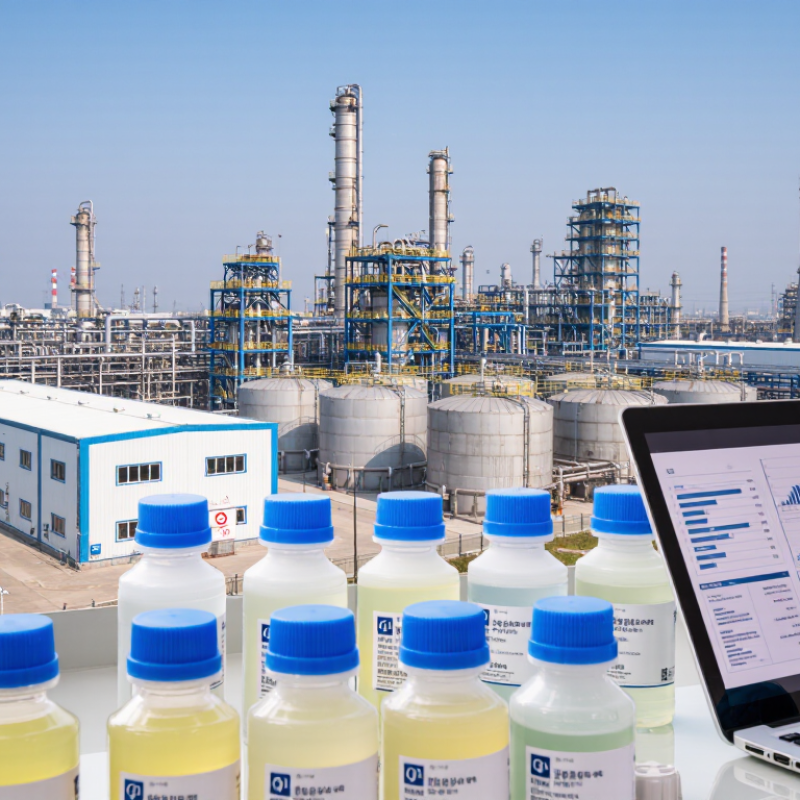
China’s Role in the Global Chemical Industry
Why Choose China for Superior Chemical Solutions?
China now sits at the center of the global chemical industry. Cefic’s 2024 Facts and Figures report estimates that China generated about 43% of global chemical sales in 2023. This scale supports broad raw-material access, dense supplier networks, and shorter transport routes between producers and downstream manufacturers. In practical terms, buyers can compare multiple grades, packaging formats, and production schedules within one industrial region.
The advantage is not only volume. China’s National Bureau of Statistics reported research and development spending of approximately 3.6 trillion yuan in 2024, equal to 2.68% of national GDP. That investment strengthens process engineering, materials testing, and production automation. Many facilities now use digital monitoring, traceability systems, and tighter batch controls. Results can be consistent.
Still, scale does not guarantee superior performance. Quality may differ between suppliers, even when specifications appear similar. Careful buyers should review certificates, audit production sites, test representative samples, and confirm export documentation. The International Organization for Standardization’s quality principles also stress process control and evidence-based decisions. These steps reduce uncertainty, especially for coatings, water-treatment materials, polymers, and specialty intermediates. China’s role is powerful, but its reliability depends on verification, technical communication, and disciplined supplier management.
Why Choose China for Superior Chemical Solutions? - China’s Role in the Global Chemical Industry
| Evaluation Dimension | China’s Position or Data | Why It Matters for Chemical Solutions | Reference and Year |
|---|---|---|---|
| Global Industry Scale | China represented approximately 39.2% of global chemical sales in 2023. | A large industrial ecosystem supports broad product availability, strong supplier competition, and scalable sourcing. | European Chemical Industry Council, 2024 edition using 2023 data |
| Domestic Market Size | China’s population was approximately 1.410 billion at the end of 2023. | A large domestic market creates demand across construction, electronics, automotive, agriculture, healthcare, packaging, and energy. | National Bureau of Statistics of China, 2024 statistical communiqué |
| Research and Development Capacity | National research and development expenditure reached approximately RMB 3.33 trillion in 2023, equal to 2.64% of GDP. | Significant R&D investment supports process improvement, formulation development, scale-up, and customized chemical applications. | National Bureau of Statistics of China, 2023 data |
| Industrial Integration | China has extensive integration among basic chemicals, materials, polymers, specialty chemicals, equipment manufacturing, and downstream industries. | Integrated supply chains can shorten development cycles and reduce coordination risks between raw-material and finished-product suppliers. | International Energy Agency and national industrial statistics; industry structure assessed through 2023–2024 reports |
| Manufacturing Infrastructure | China’s manufacturing sector has remained the world’s largest by value added for more than a decade. | A broad manufacturing base provides access to pilot production, process equipment, packaging, testing, and contract manufacturing capabilities. | United Nations Industrial Development Organization and World Bank manufacturing indicators |
| Logistics and Connectivity | China’s ports handled approximately 16.97 billion tonnes of cargo in 2023. | High-volume ports and multimodal transport networks support domestic distribution and international chemical shipments. | Ministry of Transport of the People’s Republic of China, 2023 data |
| Renewable-Energy Transition | China’s cumulative installed renewable-energy capacity exceeded 1,450 GW at the end of 2023. | Growing renewable-energy capacity supports developing lower-carbon chemicals, recyclable materials, battery materials, and clean-energy intermediates. | National Energy Administration of China, 2023 data |
| Quality and Compliance Development | Chemical manufacturers increasingly operate under national standards, hazardous-chemical controls, environmental permitting, and product-safety requirements. | Improved regulatory alignment helps international buyers evaluate documentation, traceability, quality systems, and environmental performance more systematically. | State Administration for Market Regulation and Ministry of Ecology and Environment of China; regulations and standards current through 2024 |
Related Posts
-
Top Carolina Chemicals Suppliers for Global Buyers
-

Top 10 Chemical Solutions Suppliers for Global Buyers
-
Top 10 Best Practices to Order Chemicals Safely and Efficiently
-
Top 10 Superior Chemical Solutions for Effective Industrial Applications
-
Top 10 Essential Features of Chemical Labs for Effective Research
-
Top Carolina Chemical Products for Global Buyers in 2026?