What is Znse Lens and its Applications in Industry?
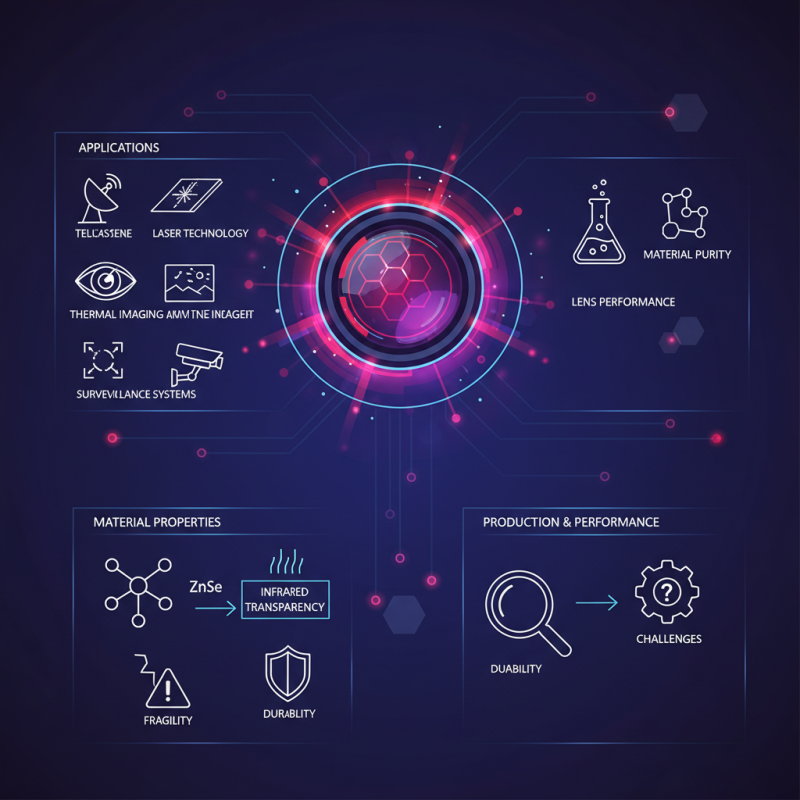
Znse Lenses are crucial in various industrial applications, especially in the field of optics. Dr. Emily Carter, a renowned expert in optical materials, once stated, "ZnSe lenses provide unmatched clarity and durability for high-performance applications." This highlights the importance of ZnSe lenses in industries like telecommunications and laser technology.
These lenses are crafted from zinc selenide, a material known for its transparency in infrared wavelengths. This quality makes ZnSe lenses ideal for CO2 laser systems. In addition to laser applications, they are also valuable in thermal imaging and surveillance systems. The reliability of ZnSe lenses can significantly enhance the efficiency of these systems.
However, it’s essential to consider the challenges associated with ZnSe lenses. They can be more fragile than other materials, requiring careful handling. The production process also raises questions regarding material purity and lens performance. Addressing these concerns is vital for their successful implementation in diverse applications.
What is ZnSe Lens?
ZnSe (Zinc Selenide) lenses are pivotal in various industrial fields. They are known for their excellent optical properties. High transmission in the infrared spectrum makes them suitable for lasers and thermal imaging. Industries rely on these lenses due to their durability and efficiency in harsh environments.
For instance, a study from a leading optical research institute indicates that ZnSe lenses can provide up to 90% transmission at 10.6 micrometers. This capability is crucial in laser applications, where precision is essential. Zinc Selenide also exhibits low absorption, enhancing its performance in optical systems.
Tips: When choosing a ZnSe lens, consider the specific wavelength requirements. The performance of these lenses can vary based on thickness and coating. Always check the manufacturer's specifications for optimal results.
Moreover, researchers have noted that while ZnSe lenses are effective, they can be prone to scratches and surface damage. This vulnerability makes proper handling and maintenance vital. Regular inspections can help detect potential issues early. It’s important to reflect on the trade-offs between cost and performance when integrating these lenses into systems.
ZnSe Lens Applications in Industry
The chart above illustrates the percentage of various applications for ZnSe lenses in different industrial sectors. As shown, laser systems utilize the majority, followed by optical coatings and medical equipment.
Properties and Characteristics of ZnSe Lenses
ZnSe lenses are increasingly recognized for their unique properties and applications in various industries. Made from zinc selenide, these lenses offer exceptional optical clarity in the infrared spectrum. This feature makes them ideal for high-power laser systems and optical devices. Their durability and resistance to thermal shock also enhance their usability in demanding environments.
One notable characteristic of ZnSe lenses is their transmission efficiency. They can efficiently transmit wavelengths between 0.5 to 20 microns. This broad range is crucial in fields like medical imaging and infrared spectroscopy. Additionally, ZnSe lenses exhibit low birefringence, which minimizes distortion during image capture. However, they are not immune to scratches. Proper handling and maintenance are fundamental to preserving their quality.
The challenges faced with ZnSe lenses lie primarily in their cost and manufacturing. Producing high-quality lenses requires precision and expertise. This can lead to inconsistencies in lens performance. Furthermore, while they perform excellently in many scenarios, there are occasions where alternative materials might offer better results. Balancing these factors is essential for optimal applications in industrial settings.
Common Manufacturing Techniques for ZnSe Lenses
ZnSe lenses, made from zinc selenide, are essential in various industrial applications, especially in optics. Their production relies on advanced manufacturing techniques that ensure clarity and durability. One common method is the diamond turning process, which achieves precise shapes and smooth surfaces. This technique uses a diamond-coated tool to carve the lens material, ensuring minimal surface roughness.
Another effective manufacturing technique is optical polishing. This step refines the lens's surface further and enhances its performance in laser applications. Polishing removes any imperfections, promoting optimal light transmission. The consistency of the lens's surface plays a key role in achieving high-quality optical performance. Each lens undergoes rigorous testing to guarantee reliability.
Despite these sophisticated methods, challenges remain. For example, achieving the perfect balance between refractive index and thickness can be tricky. Manufacturers often face difficulties in maintaining uniformity across larger lenses. Continuous refinement is needed to address these issues while ensuring that ZnSe lenses meet industry standards. Experimentation and innovation are crucial to overcoming such hurdles.
Key Applications of ZnSe Lenses in Various Industries
Zinc selenide (ZnSe) lenses are essential tools in various industries, known for their optical properties. They exhibit high transmission in the mid-infrared range, making them perfect for applications in thermal imaging. In a market report by Market Research Future, the demand for infrared optics is projected to grow by 15.2% annually, underscoring the importance of materials like ZnSe in military and surveillance sectors.
Moreover, ZnSe lenses are widely used in laser systems. Industries such as aerospace and manufacturing utilize these lenses for laser cutting and welding. The Laser Institute of America predicts that the adoption of laser technology will rise, with a projected market value of $15 billion by 2025. This indicates a growing reliance on materials that can withstand high power densities like ZnSe.
Despite their advantages, there are challenges. ZnSe lenses can be more brittle than other materials. This fragility necessitates careful handling and processing. Additionally, while ZnSe lenses perform excellently in many environments, they may not always be the most cost-effective option for every application. Adopting ZnSe lenses requires balancing performance and material costs in specific projects.
Advantages of Using ZnSe Lenses in Optical Systems
ZnSe lenses are a popular choice in optical systems due to their unique properties. One major advantage is their high transmission in the infrared spectrum. This is crucial for applications like laser systems and thermal imaging. The optical clarity of ZnSe lenses contributes to sharper images and better system performance. This makes them suitable for diverse industries, including defense and medical imaging.
Another significant benefit of ZnSe lenses is their durability. They can withstand harsh environments and resist damage from infrared radiation. This robustness increases their lifespan compared to other optical materials. Users often appreciate the lower maintenance costs associated with these lenses. However, it is essential to consider that they may require specific cleaning methods to maintain their optical quality.
While ZnSe lenses offer many advantages, there are challenges. The cost can be higher than other materials, which may limit their use in budget-sensitive projects. Proper handling is crucial, as scratches are more visible on their surface than on other optical materials. This highlights the need for training in their use. Nevertheless, the benefits of using ZnSe lenses often outweigh these concerns in specialized applications.
What is ZnSe Lens and its Applications in Industry? - Advantages of Using ZnSe Lenses in Optical Systems
| Dimension | ZnSe Lens Characteristics | Applications in Industry | Advantages |
| Transmission Range | 0.5 to 20 microns | Infrared optics | High transmittance in IR spectrum |
| Hardness | Mohs Hardness 5.5 | Laser systems | Durable and scratch-resistant |
| Thermal Stability | Stable at high temperatures | High-power applications | Reliable performance under temperature variations |
| Weight | Lightweight | Portable optical devices | Ease of handling and integration |
| Refractive Index | ~2.4 | Spectroscopy | High performance in refraction |